Source rechargeable led camping headlight for Mining Hiking and Emergency
Explore 30 verified options for the rechargeable led camping headlight suitable for mining, hiking, and emergency lighting. Compare specifications like battery type, IP rating, and irradiation distance from suppliers in China with lead times as low as 15 days.
Key considerations
Products List


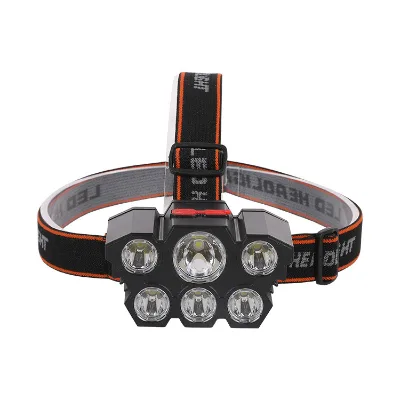
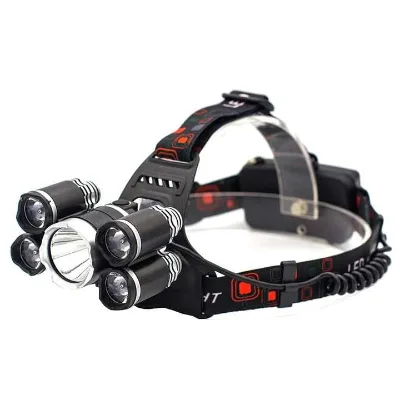


Comprehensive Sourcing Guide
Strategic Sourcing Guide for Rechargeable LED Camping Headlights
Understanding Technical Specifications and Performance Metrics
When sourcing rechargeable LED camping headlights, buyers must first dissect the technical specifications that define operational capability. The core of any headlight system lies in its light source and power delivery. Current market offerings frequently utilize LED technology, with some advanced models integrating both LED and COB (Chip on Board) sources to balance beam distance with wide-area illumination. The efficiency of these light sources is critical; observed data indicates lamp luminous efficiency ratings around 3W to 5W, which serves as a baseline for energy consumption versus output.
Battery performance is another pivotal specification. The majority of modern units rely on Lithium Ion technology, specifically rechargeable batteries with capacities ranging from 1200mAh to 1500mAh. Voltage standards typically align with 3.7V systems. Buyers should verify the actual lighting time in hours, noting that some product attributes list usage hours in conjunction with material specifications, suggesting that runtime is often dependent on the casing material's thermal properties or battery integration. The irradiation distance is a key differentiator for outdoor utility; observed ranges span from less than 50 meters for general task lighting up to 200 meters for long-range search applications. A distance of 50 to 100 meters is common for standard hiking and camping scenarios, while specific models may offer extended reach up to 100-200 meters.
Color temperature also influences user experience. A standard daylight white of 5000K is prevalent, providing high contrast for night vision and safety. Furthermore, the physical construction materials dictate durability. Standard compositions include ABS plastic, often reinforced with silicone or aluminum alloy for impact resistance. Some premium or ruggedized units utilize rubber or nylon head straps to ensure comfort during extended wear. The weight of these devices is a significant factor for hikers; observed specifications indicate weights as low as 68 grams for compact models, ensuring minimal fatigue during long treks.
Compliance and Certification Verification
Navigating the regulatory landscape is essential for international procurement. Rechargeable lighting products must adhere to specific safety and environmental standards to be legally sold in major markets. A comprehensive review of product attributes reveals a consistent requirement for CE and RoHS certifications. These are fundamental for European and many global markets, ensuring the product meets electromagnetic compatibility and restricts hazardous substances.
For markets in North America, FCC certification is frequently observed alongside CE and RoHS, indicating compliance with electromagnetic interference regulations. Additionally, some suppliers provide CCC (China Compulsory Certification) for domestic and regional distribution. It is imperative for buyers to request valid test reports for these certifications rather than relying solely on marketing claims. The presence of multiple certifications, such as FCC, CE, RoHS, and CCC, suggests a higher level of manufacturing rigor, but verification is mandatory.
Beyond certifications, the IP (Ingress Protection) rating is a critical compliance metric for outdoor gear. An IP65 rating is observed in the current product pool, signifying that the device is dust-tight and protected against water jets from any direction. This rating is suitable for most camping and hiking conditions but may not suffice for submersion. Buyers must confirm the specific IP rating for their intended use case, as "Waterproof" is a general feature claim that requires a numerical standard to be meaningful in a procurement contract.
Cost Drivers and Pricing Dynamics
The pricing structure for rechargeable LED camping headlights is influenced by a complex interplay of component quality, customization, and order volume. The observed price range in the market spans from $0.86 to $11.00 USD. This wide variance is not merely a reflection of brand but is driven by specific cost drivers. The type of LED chips used, such as CREE, which is noted in several product attributes, significantly impacts the unit cost due to higher efficiency and longevity.
Material composition is another primary cost factor. Units constructed with ABS plus aluminum alloy or rubber tend to be priced higher than those using standard ABS plastic or nylon straps alone. The inclusion of advanced features like anti-fog technology, multiple light modes (such as the observed 7 modes), and higher battery capacities also elevates the price point. Customization availability is a standard feature in this category, allowing buyers to tailor branding or specific technical requirements, which can add to the base cost depending on the complexity of the modification.
Order volume plays a decisive role in the final landed cost. The Minimum Order Quantity (MOQ) varies significantly, with observed ranges from 1 to 1000 units. However, a specific high-confidence fact indicates an MOQ of 100 pieces for certain models. Buyers purchasing below this threshold may face higher per-unit costs or may need to negotiate sample orders. The sample availability is noted as free in some contexts, which is a valuable tactic for initial quality assessment before committing to bulk production.
Typical Applications and Usage Scenarios
The versatility of rechargeable LED camping headlights makes them suitable for a diverse array of applications. The primary use cases identified include mining, hiking, camping, and emergency lighting. These applications demand different performance characteristics. For mining and emergency scenarios, the shock-resistant and waterproof features are non-negotiable, ensuring the light remains functional in harsh, unpredictable environments. The ability to withstand shock is a critical safety feature for industrial and rugged outdoor use.
Seasonality is another factor in application planning. The products are designed for year-round use, covering Spring, Summer, Autumn, and Winter. This implies that the thermal management of the battery and the durability of the casing must function effectively in freezing temperatures as well as hot, humid conditions. The anti-fog feature, observed in specific models, is particularly relevant for winter sports or humid environments where condensation can obscure the light beam.
For hikers and campers, the weight and battery life are paramount. A lightweight unit of 68 grams reduces fatigue, while a lighting time that supports extended trips ensures safety during night navigation. The irradiation distance of 50 to 100 meters is ideal for trail finding and setting up camp, while the 100-200 meter range serves search and rescue operations or long-distance trail marking. The inclusion of multiple light modes allows users to switch between high-intensity beams for distance and low-intensity modes for reading or conserving battery life.
Supplier Evaluation and Operational Capabilities
Evaluating a supplier for this category requires a focus on their operational flexibility and logistical capabilities. The production origin for these goods is consistently listed as China, specifically with the Fob Port of Xiamen. This location is a major hub for electronics manufacturing, offering a robust supply chain for components like LEDs and batteries. However, buyers must verify the supplier's ability to handle the specific lead times required for their inventory planning.
Lead times are a critical operational metric. Observed data suggests a standard lead time of 15 days for production. This is a relatively short turnaround, which is advantageous for replenishing stock or fulfilling urgent orders. However, buyers should confirm if this lead time includes packaging and quality control processes or if it represents only the manufacturing duration. The packaging standard is typically a color box or unit pack, which is suitable for retail display but may require additional bulk packaging for wholesale distribution.
Customization is a key differentiator among suppliers. The availability of customization allows buyers to adapt the product to their specific brand identity or functional needs. When evaluating suppliers, buyers should assess the extent of this customization, including the ability to modify the head strap material, battery capacity, or light output modes. The warranty period is another indicator of supplier confidence; observed warranties range from 1 year to 2 years. A longer warranty period often correlates with higher quality control standards and better after-sales support.
Quality Control and Long-Term Procurement Considerations
Implementing a robust quality control (QC) strategy is essential to mitigate risks associated with electronic lighting products. Given the variation in irradiation distance and battery capacity, buyers should establish clear acceptance criteria based on the observed specifications. For instance, verifying that the actual irradiation distance matches the claimed 50-100m or 100-200m range requires specific testing equipment. Similarly, confirming the battery capacity (1200mAh vs. 1500mAh) and voltage (3.7V) is necessary to ensure the product meets the promised lighting time.
The material standards, such as ABS+Silicone or ABS+Aluminum alloy, should be verified through material safety data sheets (MSDS) or physical inspection. The shock-resistant and waterproof claims must be validated against the IP65 rating or equivalent standards. Long-term procurement considerations also involve the sustainability of the supply chain. With certifications like RoHS in place, buyers can be assured that the products are manufactured with restricted hazardous substances, aligning with global environmental trends.
Finally, the procurement strategy should account for the lifecycle of the product. The warranty terms, whether 1 or 2 years, provide a buffer against early failures. Buyers should negotiate clear terms for defect rates and replacement policies. The availability of free samples allows for a thorough pre-shipment inspection, ensuring that the final bulk order meets the required standards for shock resistance, waterproofing, and battery performance. By focusing on these technical and operational details, buyers can secure a reliable supply of high-quality rechargeable LED camping headlights that meet the demands of the global market.
FAQs
What certifications do rechargeable led camping headlight products have?
Most products carry CE, RoHS, and FCC certifications. Some models also include CCC certification for regional compliance. Buyers should verify test reports to confirm these standards are valid for their target markets.
Which materials are used for the rechargeable led camping headlight casing?
Casing materials typically include ABS plastic, often combined with silicone, aluminum alloy, or rubber. Specific models use ABS with nylon head straps. These materials ensure shock resistance and durability for outdoor use.
Can buyers customize the rechargeable led camping headlight design?
Yes, customization is available for these products. Buyers can tailor branding or specific technical requirements. This flexibility allows adaptation to unique brand identities or functional needs without compromising core performance.
How long is the lead time for rechargeable led camping headlight orders?
The standard lead time is 15 days for production. This duration covers manufacturing but may not include packaging or shipping. Buyers should confirm if this timeline includes quality control processes before placing bulk orders.
What is the typical MOQ for rechargeable led camping headlight suppliers?
The minimum order quantity ranges from 1 to 1000 units depending on the supplier. Some specific models require an MOQ of 100 pieces. Orders below this threshold may face higher per-unit costs or require sample negotiations.
Which battery capacity is standard for rechargeable led camping headlight units?
Standard battery capacities range from 1200mAh to 1500mAh at 3.7V. Lithium Ion technology is the primary power source. This capacity supports lighting times suitable for hiking, camping, and emergency scenarios.
What irradiation distance does the rechargeable led camping headlight offer?
Irradiation distances vary from under 50 meters up to 200 meters depending on the model. Common ranges are 50-100 meters for general use and 100-200 meters for long-range search. Buyers should verify specific beam distances for their needs.
Where are rechargeable led camping headlight products typically manufactured?
Products originate from China with the FOB port located in Xiamen. This location is a major hub for electronics manufacturing. Buyers should verify the specific factory location and logistics capabilities for their supply chain planning.